When Your Kid Just Won't Go to School…
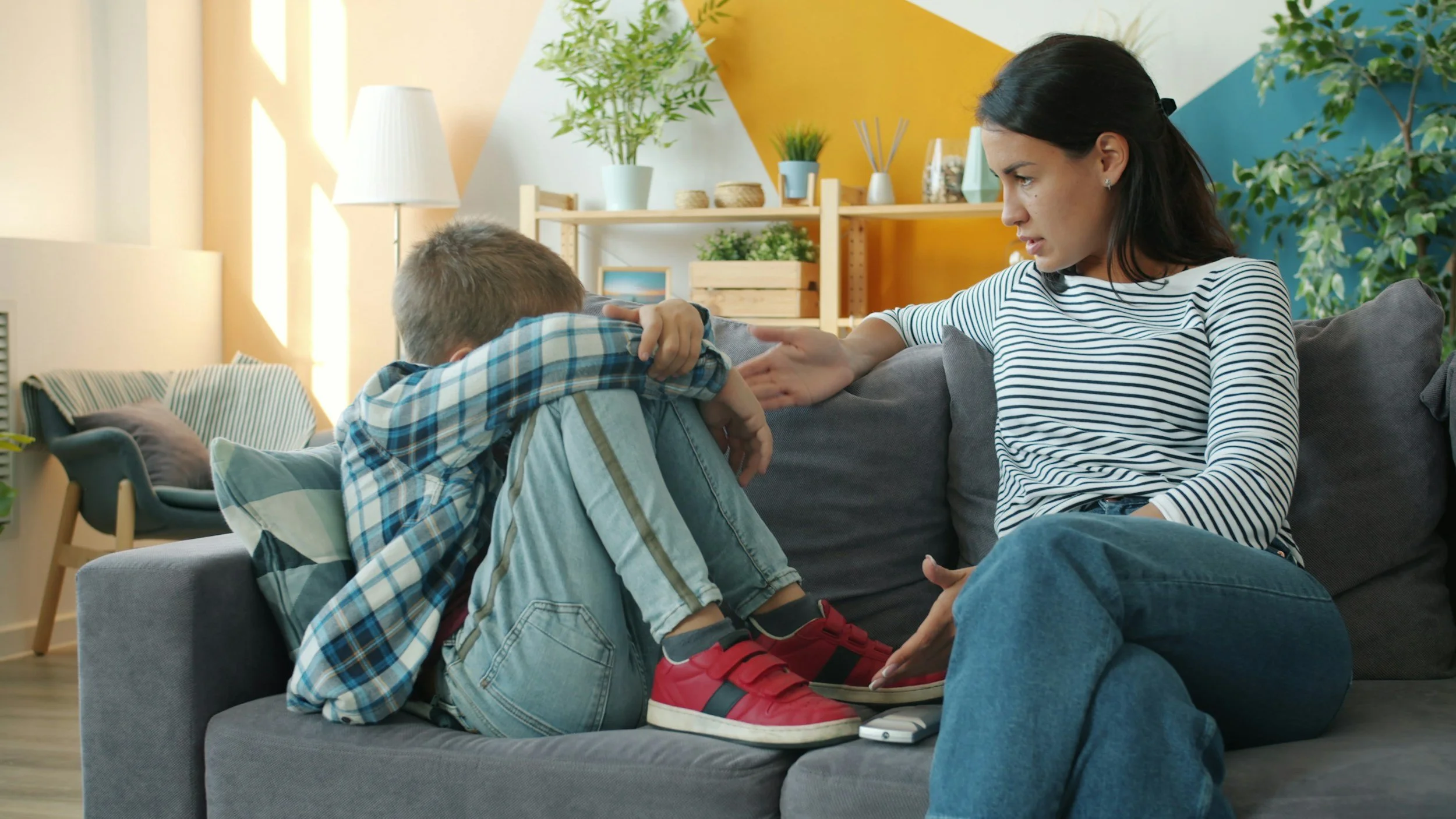
This week, my oldest — who is taller than me and almost as big as me — decided he was not going to school. Not "I don't feel like it." Not "five more minutes." A full, immovable no.
No threats moved him. No bribes moved him. Walking through consequences, walking through what would actually happen if he didn't go — none of it made a dent.
I don't have this one figured out. I want to say that plainly, because I think a lot of us are quietly white-knuckling through mornings like this one and assuming everyone else has a system we missed. We don't all have it figured out. Some days we're just doing our best and hoping it's enough.
So I did what I do when I don't have the answer — I went looking for one.
Here's what I found, and where I landed:
It's Rarely About the School Day Itself
Here's the reframe that stopped me: school refusal is almost never about not wanting to go to school.
It's a symptom, not the problem. Anxiety, depression, bullying, peer conflict, an undiagnosed learning difference, or a scary incident at school can all show up looking like plain stubbornness. Experts are direct about this — the instinct to treat it as defiance and push harder is usually the wrong move, because you end up fighting the symptom instead of the actual thing underneath it.
For our kids specifically — kids who came to us through foster care or adoption — there's another layer. The Center for Adoption Support and Education points out that school refusal in adopted, foster, and kinship kids can be rooted in things that have nothing to do with the classroom at all: too many school changes from past placements, embarrassment about a changing family situation, or even a quiet fear that if they leave the house, something will change while they're gone — their stuff will be packed up, home won't be home anymore. That one stopped me in my tracks. Of course leaving the house feels unsafe. Their history taught them that leaving can mean losing.
The Physical Signs Are Real, Not Manipulation
If your kid has headaches, stomachaches, or that glazed, dug-in look every single school morning — and it eases the second they're told they can stay home — that's not proof they're faking it. That pattern is actually one of the textbook signs of school refusal. The relief when they stay home reinforces the avoidance, which makes tomorrow morning harder, not easier. It's a loop, and yelling louder doesn't break a loop.
What Actually Seems to Help
●Get curious before you get firm. Ask what's hard about school right now — not "why won't you go," but "what's the worst part of the day." All-or-nothing thinking (they're either at school all day or not at all) rarely works as a starting point. Partial wins count.
●Build a safety plan for the bad moments, not just the morning. A place to go when it gets overwhelming — the counselor's office, a text to check in — gives back a sense of control instead of forcing it.
● Loop in the school. Teachers and counselors can't help with what they don't know is happening. This isn't tattling on your kid; it's building a team.
● Be careful with rewards. Bribing for attendance can teach a kid to hide what they're actually feeling just to get the prize — which buries the real issue instead of solving it.
● Bring in a professional if this isn't a one-day thing. Therapy approaches like CBT and family therapy show up again and again as the actual intervention — not punishment, not pep talks.
For Us Specifically
If your kid has a trauma history, AdoptUSKids' advice is the one I keep coming back to: don't take the behavior personally, and don't expect to understand all of it right away. Some of what's underneath a placement or an adoption doesn't surface for months or years. You're not missing something because you don't have the full picture yet.
Where to Actually Go for Help
● Center for Adoption Support and Education (C.A.S.E.) — their piece on school refusal in kids touched by adoption and foster care is the most specific resource I found for exactly this situation.
● Child Mind Institute — free, evidence-based parent resources on school avoidance, anxiety, and trauma, including trauma-informed material specifically for foster and adoptive families.
● AdoptUSKids — practical trauma guidance from experienced foster and adoptive parents, plus a way to find state-based parent support groups.
● Your child's school counselor. Not as a last resort — as a first call.
Food for Thought
We tell our kids it's okay to not have it all together. Maybe it's time we believed that about ourselves too.
If your kid won't go to school tomorrow, you don't have to have the perfect response ready. You just have to be willing to ask what's really going on — and to ask for help when you don't know. That's not failing. That's the job.
No one should walk this alone — including the days when your own kid feels like a mystery you can't solve. If you're in this right now, you're not the only one.
♥ If this resonated with you, we'd love to have you in the Fostering a Chord community. Our newsletter is written for everyone who cares about foster and adoptive families — whether you're fostering, adopting, or just showing up.
Fostering a Chord is a support community for foster parents and adoptive families navigating one of the most meaningful — and most isolating — journeys a family can take. Founded by Stacey Felzer and rooted in the Atlanta, Georgia area, we believe foster and adoptive parents deserve real community, not just resources. Our blog covers practical guidance, personal stories, and encouragement for every stage of the foster care and adoption journey. If you've ever felt like the only one in the room who understands, this community was built for you. Subscribe to our newsletter and find your people at fosteringachord.org.