
ADHD Tips, Tricks, and Ideas That Helped in Our Home
When my boys first came into my home through foster care, I knew something right away.
I couldn't parent them the same way many parents naturally parent their biological children.
These boys came into my home carrying things most children shouldn’t have to carry. They were hurt. Afraid. Unsure. Unsettled. In many ways, they were still trying to figure out if the world was a safe place.
When kids come from unstable environments, those experiences often affect how their brains process stress, attention, and emotional regulation. That can show up in ways that look a lot like ADHD.
And the statistics back that up.
“Research shows that children in foster care are significantly more likely to have ADHD. Studies estimate that 17% to over 25% of children in foster care have an ADHD diagnosis, compared to about 3–7% of children in the general population. In other words, roughly 1 in 4 children in foster care may have ADHD.”
Some research even shows that children in foster care are three times more likely to be diagnosed with ADHD compared to other children receiving Medicaid services.
That doesn’t mean every foster child has ADHD—but it does mean many of our kids struggle with executive functioning skills, things like:
Staying focused
Following multi-step instructions
Organizing tasks or materials
Controlling impulses
Regulating emotions
When those skills are weak or still developing, everyday tasks can feel overwhelming.
Early on, I realized something important in our home.
If I wanted my boys to succeed, I needed to adjust the environment around them, not just correct the behavior.
Once I began doing that, things started to shift. Not perfectly—but noticeably.
Here are some ADHD tips, tricks, and ideas that helped in our home.
Start by Changing the Environment

One of the biggest mindset shifts for me was realizing that some struggles weren’t about disobedience.
Sometimes kids simply can’t manage the environment they're in.
Too much noise. Too much clutter. Too many instructions at once.
Instead of constantly redirecting behavior, I started asking:
What can I change around them to make success easier?
Often, the answer was something small.
But those small changes added up.
Reduce Distractions
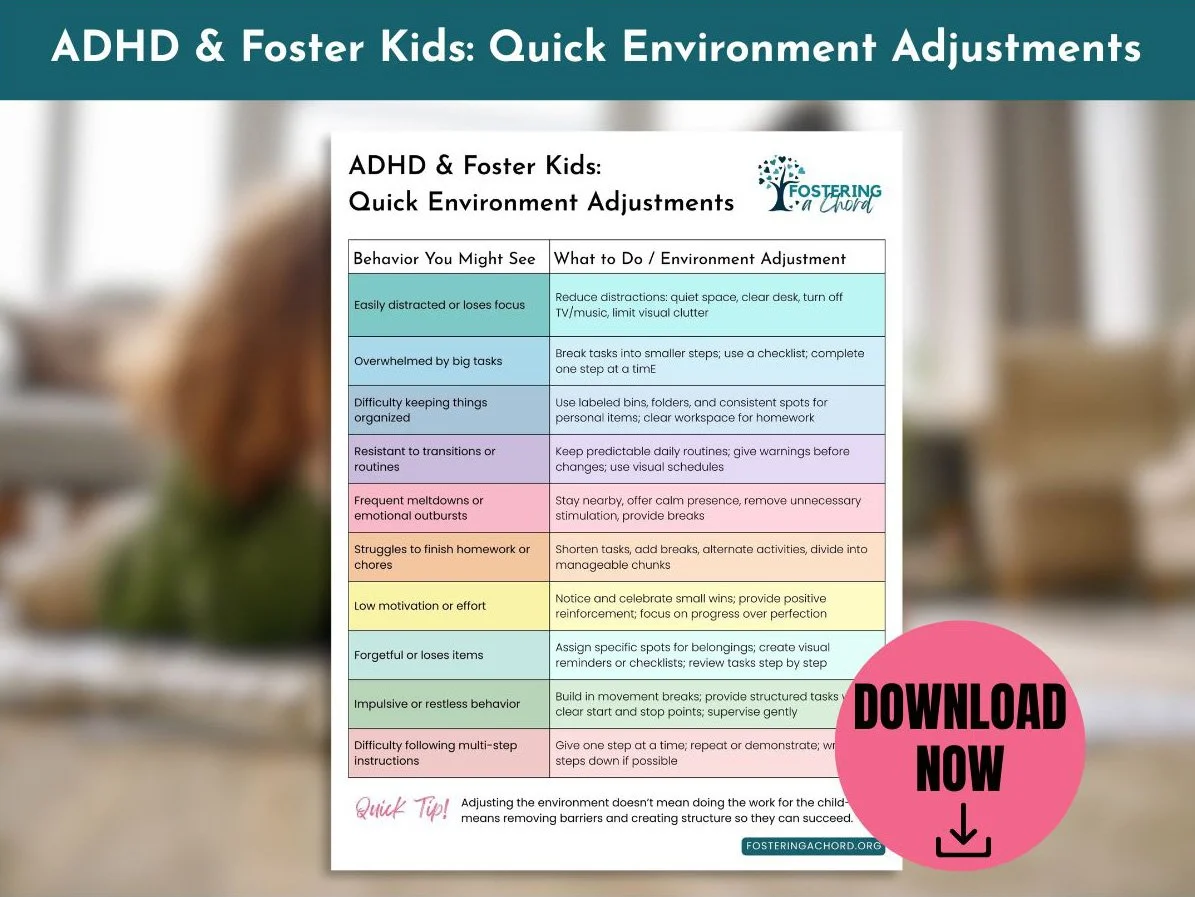
Kids with ADHD tend to notice everything happening around them.
Movement, sounds, conversations, clutter—it all competes for their attention.
In our house, we created a calmer space for homework. Sometimes that meant clearing the table, turning off background noise, or moving to a quieter area.
Less distraction usually meant less frustration.
Break Tasks Into Smaller Steps
A request like “clean your room” can feel huge to a child with executive functioning challenges.
Instead of one big task, I started breaking it into smaller pieces:
Pick up clothes
Put books on the shelf
Make the bed
Sometimes I wrote the steps down so they could see them.
Completing one small step at a time builds momentum.
Create Simple Organizing Systems
Kids with ADHD often struggle with organization. Clear systems help reduce the mental load.
In our home, simple structures helped:
Storage bins for toys and supplies
A consistent place for backpacks and shoes
Labeled folders for school papers
A clean workspace for homework
It didn’t have to be fancy. It just needed to be predictable.
Build Predictable Routines
Kids coming from unstable environments often feel calmer when life has a rhythm.
In our home, the day usually followed a simple pattern:
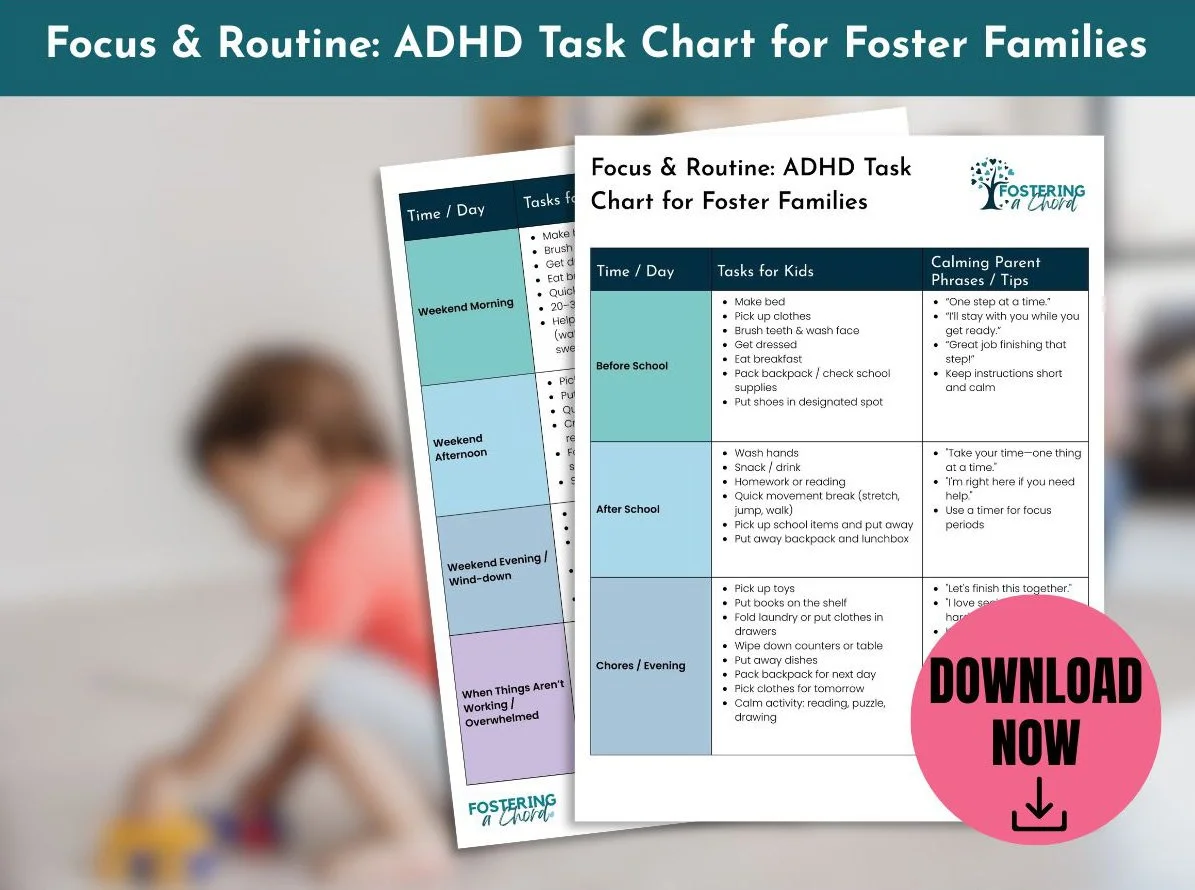
- Morning routine
- School
- Snack
- Homework
- Dinner
- Wind-down time
It wasn’t rigid, but the predictability helped everyone.
Stay Nearby When They Need Support
Sometimes kids with attention challenges simply need someone nearby.
Sitting at the table while they begin homework or complete a task can help them stay regulated and focused.
Your presence helps more than you might realize.
It quietly communicates:
You’re not alone; someone does care.
Modify Tasks When Needed
Long assignments or big chores can feel overwhelming.
It’s okay to adjust tasks when needed.
Shorter work sessions, breaks between steps, or mixing in variety can help kids stay engaged longer.
Progress matters more than perfection.
Encourage the Effort
Kids with ADHD often hear a lot about what they’re doing wrong.
That’s why encouragement matters so much.
Simple comments like:
“I noticed you stayed focused longer today.”
“You finished that step. Nice job.”
Those small moments build confidence over time.
A Word to Fellow Foster Parents
If you’re fostering or caring for children who struggle with focus, impulsivity, or organization, you’re not alone.
Many of our kids come into our homes carrying experiences that affect how their brains process the world.
Sometimes the most helpful thing we can do isn’t stricter discipline.
Sometimes it’s changing the environment so they have a better chance to succeed.
I’ve seen these adjustments make a real difference for my boys. And my hope is that a few of these ideas might help your home feel a little calmer too.
♥ If this resonated, we'd love to have you. Sign up for our newsletter and come find your people.
Fostering a Chord is a support community for foster parents and adoptive families navigating one of the most meaningful — and most isolating — journeys a family can take. Founded by Stacey Felzer and rooted in the Atlanta, Georgia area, we believe foster and adoptive parents deserve real community, not just resources. Our blog covers practical guidance, personal stories, and encouragement for every stage of the foster care and adoption journey. If you've ever felt like the only one in the room who understands, this community was built for you. Subscribe to our newsletter and find your people at fosteringachord.org.